
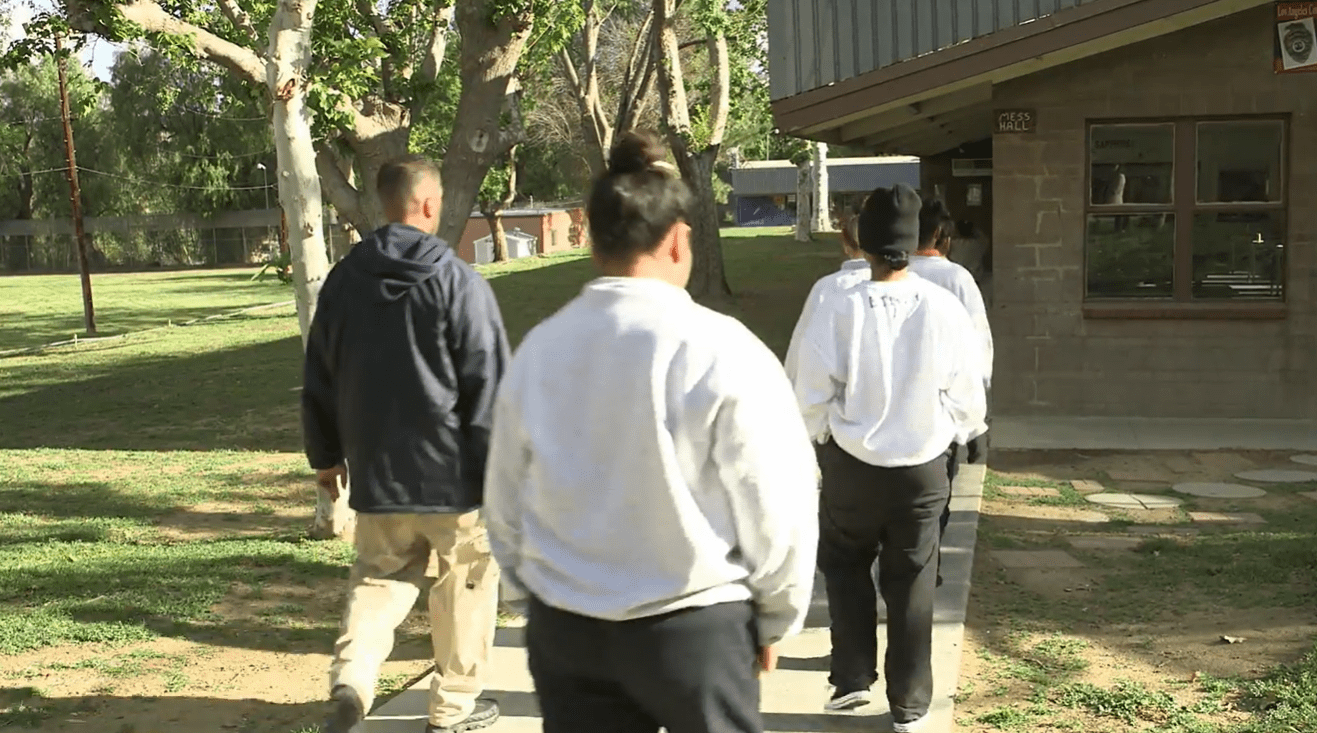
During a learning walk last fall, walking the halls of Barry J Nidorf Juvenile Hall, one thing that stood out was how students see and share their own learning experiences. On one visit, one 11th-grade student named Samuel* stayed close to me. He eagerly shared his interactive notebook, flipping to a reflection exercise on compassion. Samuel connected compassion to financial literacy. If he wanted a car someday, he explained, he needed to save money to make it happen. If he failed to plan for his future, he said, he was not showing compassion toward himself.
The connections students make never cease to amaze me.
Later, Samuel proudly showed me the results of a recent reading assessment. In just four months, he had moved from a 6th-grade reading level to an 11th-grade reading level.
That kind of growth is significant in any school setting. In the Los Angeles County juvenile court schools, it is especially notable. Students navigate extraordinary challenges while schools work carefully to maintain safety, address persistent staffing shortages, and support young people whose educational experiences have often been interrupted.
Since fall 2025, I have partnered side-by-side with approximately 20 principals and assistant principals across 10 Los Angeles County schools, including juvenile court schools and specialty schools, School of Performing Arts and International Polytechnic High School. Through the Instructional Leadership Academy, grounded in the University of Washington Center for Educational Leadership’s 5 Dimensions of Teaching and Learning framework, leaders have been strengthening their ability to observe classrooms through the lens of student experience and translate those observations into actionable feedback that improves teaching and learning.
What stands out most is the consistency of commitment across leaders working in vastly different contexts.
Leaders in the juvenile court schools navigate realities that many traditional school leaders may never encounter. They work alongside probation officers and the court system. They support students whose education has often been interrupted repeatedly, but they continue to stay engaged in the learning.
During classroom observations and debrief conversations, leaders asked questions like:
- How can I support classroom teachers to better utilize instructional assistants to differentiate instruction?
- What supports do teachers need to help students engage more deeply with and think more critically about grade-level material?
They made observations such as:
- In classrooms where every adult has a clear role, students were more engaged in the tasks they were expected to complete
- Scaffolding helped students access more complex grade-level materials
Just as importantly, the leaders hosting the group created opportunities for us to hear directly from the students themselves, and the students were ready to engage. They described classrooms where they felt challenged, supported, and known. Samuel told me he believes his teacher genuinely cares about him as a person, and that feeling motivates him to do his best in class.
One of the clearest lessons from this work is that students, regardless of the setting, carry many of the same hopes and dreams for their futures. The conditions and the challenges may differ, but students consistently step up when they are presented with rigorous learning opportunities alongside scaffolded support and a sense of belonging.
For educational leaders, that is an important reminder: improving student outcomes begins with understanding student experience. When leaders intentionally center students in their practice, they are better positioned to create schools where all young people can see a path toward limitless futures.
* Pseudonym used to protect the student’s privacy.
