
I am now thinking that just because I see something as positive doesn’t necessarily make it so. It’s critical to ensure that student voice remains at the center of visioning experience.
While many leaders believe they are centering student voice, often, adults still shape, filter, or validate what counts as “valuable” input.
Thanks in part to a grant from College Spark, the CEL team is deepening its work by partnering with leaders to co-design professional learning experiences with students. This shift ensures that those most impacted have a seat at the table, but it is not without tradeoffs. Engaging students as co-designers requires leaders to give up some control over the process and move at a more deliberate pace. It asks leaders to resist the urge to interpret, defend, or immediately solve and to sit with what they hear. For many, this means unlearning long-held habits about who holds expertise in schools.
The Leading Student-Centered Schools professional learning series invites leaders from across a school district to examine students’ experiences, particularly those furthest from success, to establish a vision for student learning guided by those insights, and to create a culture of collective leadership.
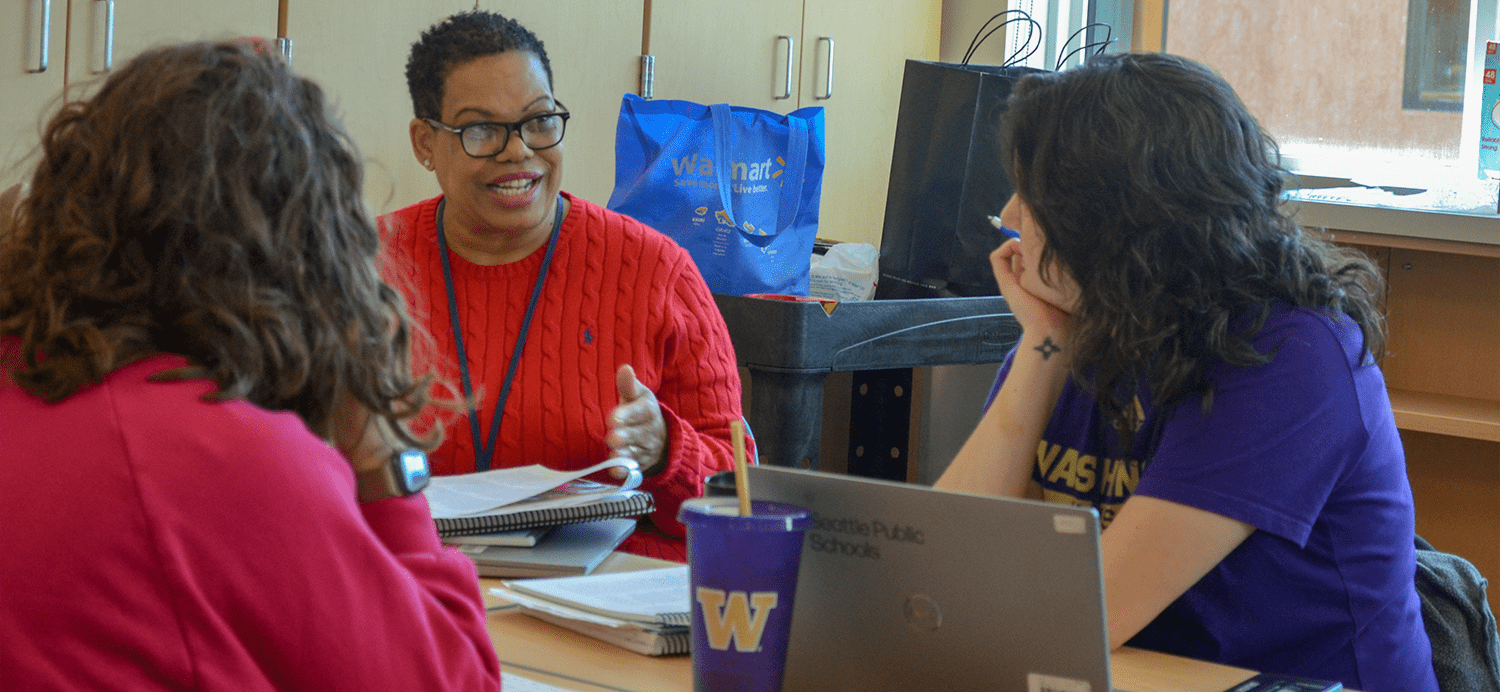
As part of the applied learning, principals, assistant principals, and teacher leaders gather at rotating host schools to conduct student listening sessions to hear from students about their school experiences. From planning to post-session reflection, students and leaders are invited to co-create the experience.
Planning for the student listening session
Before the listening session begins, we work with leaders to gather input on the session setup, asking what students need to feel safe and ready to share openly and authentically. For example, one group of elementary students told leaders that they prefer to share in small groups, while a group of high school students wanted to participate as a panel. Students have helped leaders think through key aspects like where the session should be held (classroom, library, multipurpose room), when (before school, during lunch, during homeroom), and how to configure the room (rows, small groups, large circle). Note: Students never choose to meet in the principal’s office.
Listening Sessions
During the listening sessions, leaders listen as students discuss among themselves what a perfect school setting would look like, answering questions like:
- What do you wish you could choose for yourself at school?
- How do you know you are respected by your classmates? Teachers?
- How do you know you are valued by other students and by adults?
We’ve heard students talk about everything from the impact of closing the library for meetings to pulling MLL students out for targeted support during homeroom periods. “We can make assumptions, even with observable facts. It’s important to talk and hear student voice,” reflected one 2026 Leading Student-Centered Schools participant.
During one school culture walk, leaders noted that students looked happy as they gathered with their friends in various common areas. spaces. But during a debrief students shared that they were pushed into socially designated spaces because of school cliques. Leaders were surprised by the dissonance between what they thought they saw and what the students shared. What the adults saw as student choice, the students were experiencing as confining power dynamics.
During another observation activity, leaders saw teachers in the classroom using different techniques to randomize who they called on for responses. However, what leaders saw as techniques for equalizing student voice, multilingual learners saw as stress-inducing tests to see if they were paying attention. Leaders were surprised to see that research-based techniques were negatively impacting MLL students’ confidence in sharing aloud.
Analyzing listening session data
Following listening sessions, we invite leaders and students alike to analyze what they heard, looking for patterns and themes using CEL’s Qualitative Data Analysis Protocol. Students and leaders consider: “What does this data show me?” and “Why do I think this is interesting or important?”
Common patterns include differentiated rigor for MLL students, student appreciation for group work, and students expressing pride in answering difficult questions correctly.
To support students’ meaningful participation in this part of the process, we encourage leaders to consider how to scaffold the reflection and analyze in small groups, which helps students open up and feel less intimidated. At the end of the analysis, we encourage leaders to consider implications for their leadership practice, identifying at least one thing they want to start and to stop based on what they’ve learned from the student listening sessions.
The Power of Engaging Students
Reflecting on the impact of involving students in a recent professional learning session, one leader from ESD 189 shared, “ [Today was] such a strong reminder that students are observers of their environment and a wonderful partner to enhance the culture.” This leader concluded that she wants to “start engaging students in sharing and empowering them to help make changes.”
Engaging students as partners in making meaning of their experiences, helps shift how leaders see their systems. The question becomes not just “what are students saying?” but “how are we changing because of what we hear?”
